Maintenance
Not all defibrillator “maintenance” means regular checking. Many packages only fix or replace items once you notice a problem. Annual checks help, but they are still just a snapshot. Home Defib monitoring is different: we check your defibrillator’s function/status daily, helping spot issues sooner.

When people compare defibrillator options, the word “maintenance” can sound reassuring. It suggests the device is being looked after, checked, and kept ready.
But in practice, defibrillator maintenance can mean very different things depending on the supplier.
For a home AED, that difference matters. A defibrillator is not something you use every day. It sits quietly in the background, hopefully never needed. But if it is ever needed, the important question is simple: has anyone been checking that it is ready?
Many defibrillator rental or subscription offers include maintenance. That can be useful, but it is often reactive.
In plain English, this usually means the supplier will repair or replace parts once a problem has been identified. For example, if the battery is low, the pads have expired, or the device is showing a fault, they may arrange replacement items or support.
That is not the same as the device being actively checked every day.
In many cases, the end user still has to notice the issue first. Someone still needs to look at the AED regularly, check the status indicator, make sure the device has not been moved, check that pads are in date, and report anything that looks wrong.
So “maintenance included” may mean help is available after a problem is spotted. It does not always mean the problem will be spotted for you.
Some companies offer an annual defibrillator check as a stand alone maintenance package.
That can be worthwhile. A scheduled inspection can confirm the AED is present, accessible, clean, correctly stored, and showing the right readiness status at the time of the visit. It may also include checking pad expiry dates, battery status, signage, and cabinet condition.
But an annual check is still only a snapshot.
If a device develops a fault the following week, the annual check will not know that. If pads are removed, the cabinet is damaged, or the device starts showing a warning later in the year, someone still needs to notice.
For workplaces, community sites, and public-access AEDs, annual checks can form part of a sensible management routine. For a home defibrillator, they may still leave long gaps between checks.
With many AED arrangements, the responsibility for regular checks remains with the owner, occupier, or nominated person.
That may include:
None of this is complicated, but it does require routine. That is where problems can creep in.
Life gets busy. The device is rarely used. The check gets missed. A warning light may not be noticed until much later.
Home Defib is built around monitoring, not just reactive maintenance.
Our monitored defibrillator service provides a daily check of the function/status of your defibrillator, so readiness is not left entirely to memory or occasional manual inspection.
That does not mean a defibrillator can be guaranteed to work in every possible situation. No responsible supplier should make that promise. But it does mean the device is being actively monitored, and issues can be picked up sooner than they would be with a purely user-checked or annual-check model.
The difference is simple:
Reactive maintenance: something is fixed or replaced after someone notices a problem.
Annual maintenance check: the device is inspected at a scheduled point in time.
Home Defib monitoring: the defibrillator’s function/status is checked daily, giving a more consistent view of whether the device is ready if needed.
A home defibrillator is often bought for peace of mind. It may be there because someone in the household wants fast access to an AED while waiting for emergency services.
In that setting, confidence matters.
If the device is simply placed in a cupboard and checked now and again, the responsibility sits with the household. If the supplier only steps in once a fault is reported, then the first step still depends on someone spotting the fault.
Monitoring changes that relationship. It makes readiness an ongoing process, not just a promise made at installation.
Before choosing a rental, subscription, or purchase package, ask the supplier:
The answers will tell you whether you are buying reactive support, an occasional inspection, or active monitoring.
Maintenance is useful, but the word can hide a lot of detail.
A supplier saying “maintenance included” does not always mean your defibrillator is being checked regularly. It may simply mean they will help once you identify a problem.
Home Defib monitoring is different. It is designed to provide daily visibility of your defibrillator’s function/status, so your AED is not forgotten in the background.
For a device that may never be used, but needs to be ready if it is, that is the difference that matters.
If you want a defibrillator at home without relying on memory, missed checks, or once-a-year inspections, Home Defib can help. Our monitored home defibrillator service gives you a supported AED setup with daily function/status checks, so your device is looked after in the background and ready if it is ever needed. Get in touch to find out how Home Defib monitoring works.
If you want a defibrillator at home without relying on memory, missed checks or once-a-year inspections, Home Defib can help. With Complete Protection or rental, we set it up in your home, it checks itself every day and reports to us, and we get in touch if anything needs attention. Get in touch to find out how it works.
Keep reading
Plain answers on what a defibrillator actually does, how buying, renting and monitoring compare, and why having one close by matters.

Not all defibrillator “maintenance” means regular checking. Many packages only fix or replace items once you notice a problem. Annual checks help, but they are still just a snapshot. Home Defib monitoring is different: we check your defibrillator’s function/status daily, helping spot issues sooner.
Read the article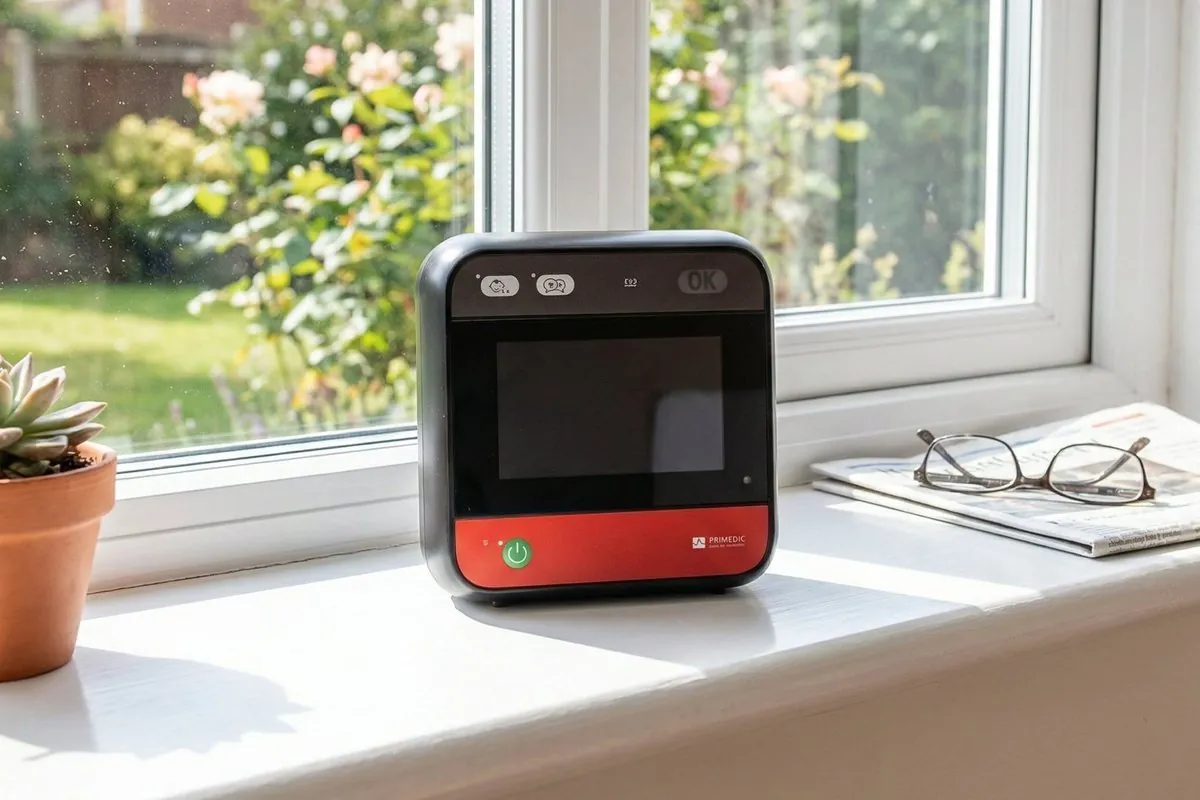
Most people picture a defibrillator as something that “restarts” a stopped heart, but it does not. It resets a chaotic rhythm so the heart can find its own beat again. And with around 7 in 10 cardiac arrests outside hospital happening at home, that is the place to keep one ready.
Read the article
Compare buying, renting and monitoring a defibrillator, from annual inspections to a daily self-check that reports to us, with no app for you to check.
Read the article
A home defibrillator means one is within reach while an ambulance is on its way. Most cardiac arrests outside hospital happen at home, so that is where having one ready matters most.
Read the article