

April 24, 2026
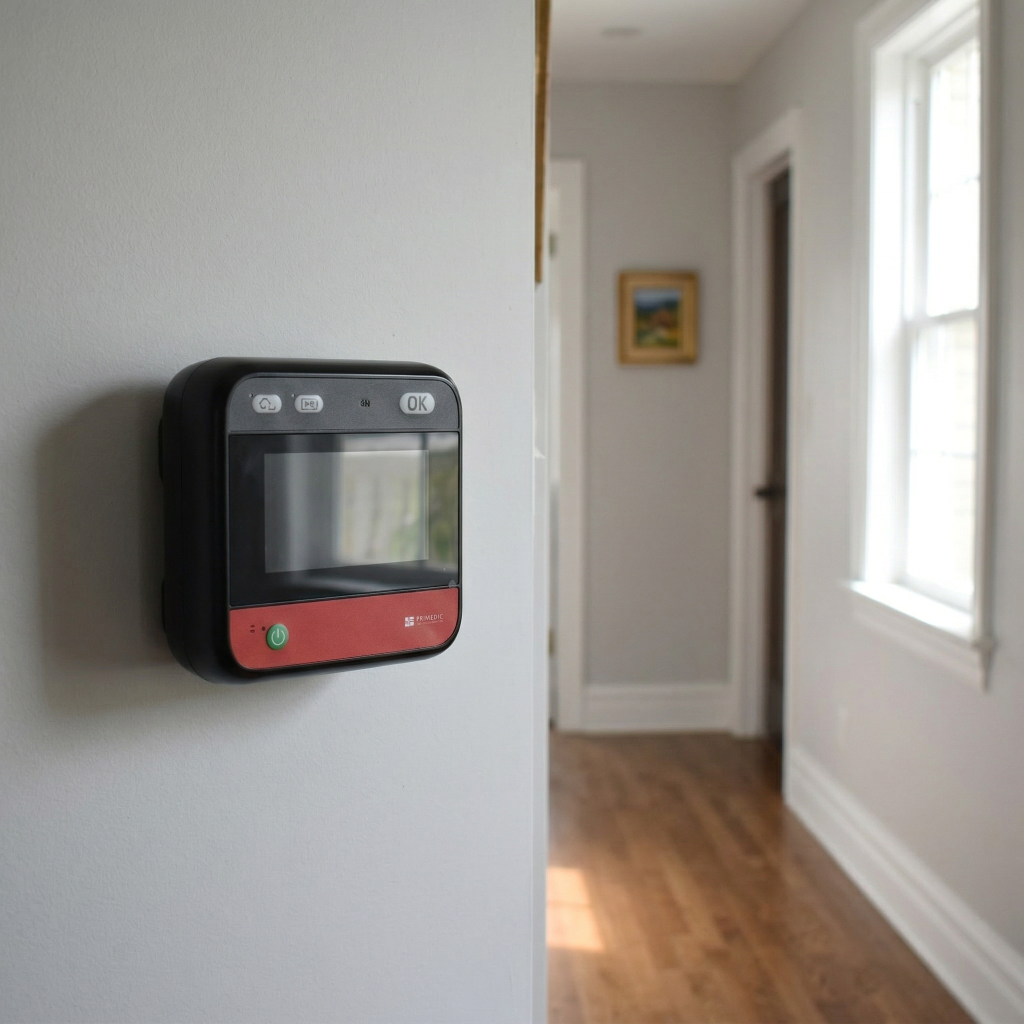
If you are looking into getting a defibrillator, you will quickly find that there are several different ways to do it.
Some suppliers let you buy one outright. Some offer rental or lease options. Some talk about maintenance. Some offer app-based alerts or monitoring. Others, like Home Defib, focus on ownership with installation, cloud monitoring and ongoing support.
At first glance, these options can sound quite similar. In reality, they are very different, especially when it comes to who owns the device, who is responsible for checking it, and what happens if a problem is identified.
Buying a defibrillator outright means you own the device from day one.
For some people, buying outright feels like the simplest option. But in many cases, once the device arrives, the responsibility sits with you.
Renting can seem attractive because the upfront cost is lower.
So while renting may reduce the initial spend, it does not always mean better value or better support.
This is where things often become unclear.
A lot of people understandably assume that maintenance, inspection, app alerts and monitoring all mean roughly the same thing. They do not.
Some providers offer annual inspections or annual maintenance visits.
That may include:
That can sound reassuring, but it is important to understand the limitation: this is not day-to-day monitoring.
Even with an annual inspection:
An inspection certificate can be useful as a record, but it only reflects the condition of the device at the time it was checked. It does not provide ongoing reassurance for the rest of the year.
Another option now offered by some suppliers is app-based monitoring.
With this type of system, the defibrillator sends information to an app. That is useful, and it is clearly better than having no visibility at all. In some cases, the app may also send notifications if something needs attention.
However, the responsibility still usually sits with the owner.
In practice, the task has often just shifted from checking the device itself to checking an app. And once a fault is identified, it is still commonly up to the owner to arrange replacement pads, batteries, repairs or whatever follow-up action is needed.
That is better than no visibility, but it is still a model that depends on the customer noticing the alert and taking action.
At Home Defib, we believe the process should be much simpler and much more reassuring.
When you buy a defibrillator from us, we deliver it in person. We make sure it is installed in a suitable place and show you and your family how it works, so there is no ambiguity.
We also bring a training device so you can practise using it. That gives you the chance to become familiar with the equipment in a calm setting, something most suppliers simply do not offer.
Just as importantly, our defibrillators send their daily and monthly checks to us through the cloud. That means you do not need to keep checking the device yourself or wonder whether everything is working properly.
And if a fault is identified, we arrange the fix or replacement. So rather than simply being told there is a problem and left to deal with it, you have the reassurance that action will be taken to get things sorted.
That is the real difference.
A defibrillator is there for an emergency. If that moment ever comes, it needs to work immediately.
That is why the difference between ownership, rental, maintenance, app alerts and real monitoring matters so much.
If a supplier simply sends you the device, the responsibility stays with you.
If a supplier offers only annual inspections, the responsibility still mostly stays with you.
If a supplier offers app alerts, you may still be the one expected to notice the warning and arrange the fix.
If the device is cloud monitored and the response to faults is handled for you, that gives a very different level of reassurance.
There is nothing wrong with wanting to own your defibrillator outright. And for some people, renting may suit their budget.
But if you want a defibrillator that is:
then Home Defib offers a much stronger solution.
It means less uncertainty, less responsibility falling back on you, and more confidence that the device will be ready if it is ever needed.
When you compare defibrillator options, do not just ask how much the device costs.
Ask:
Those are the questions that separate simply having a defibrillator from having real peace of mind.