Home / Who it’s for
A heart condition in the family, a parent far away, a farm miles from town: we help each household choose the right option, and the right spot to keep it.

Five kinds of household
The questions are usually practical ones: where it should go, who it needs to suit and who looks after it.
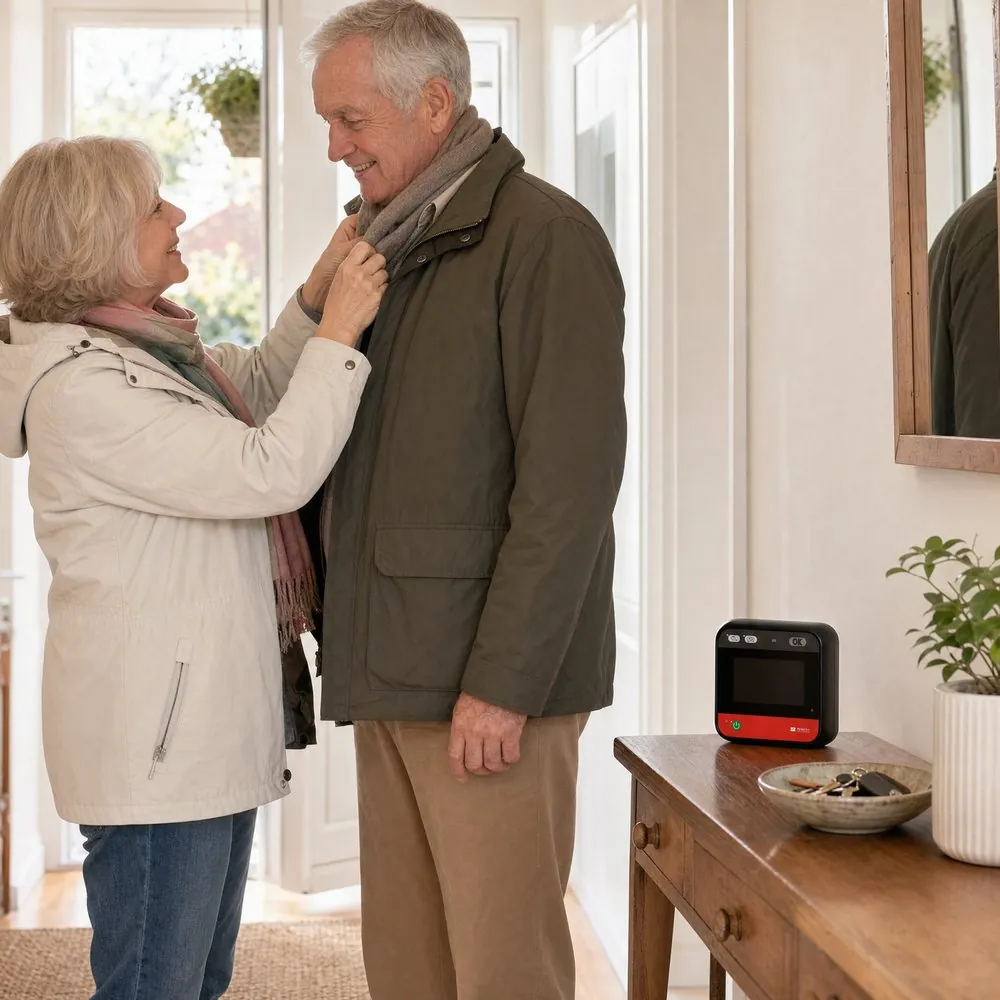
Someone in your home has a heart condition, or sudden cardiac arrest runs in the family.
Read more →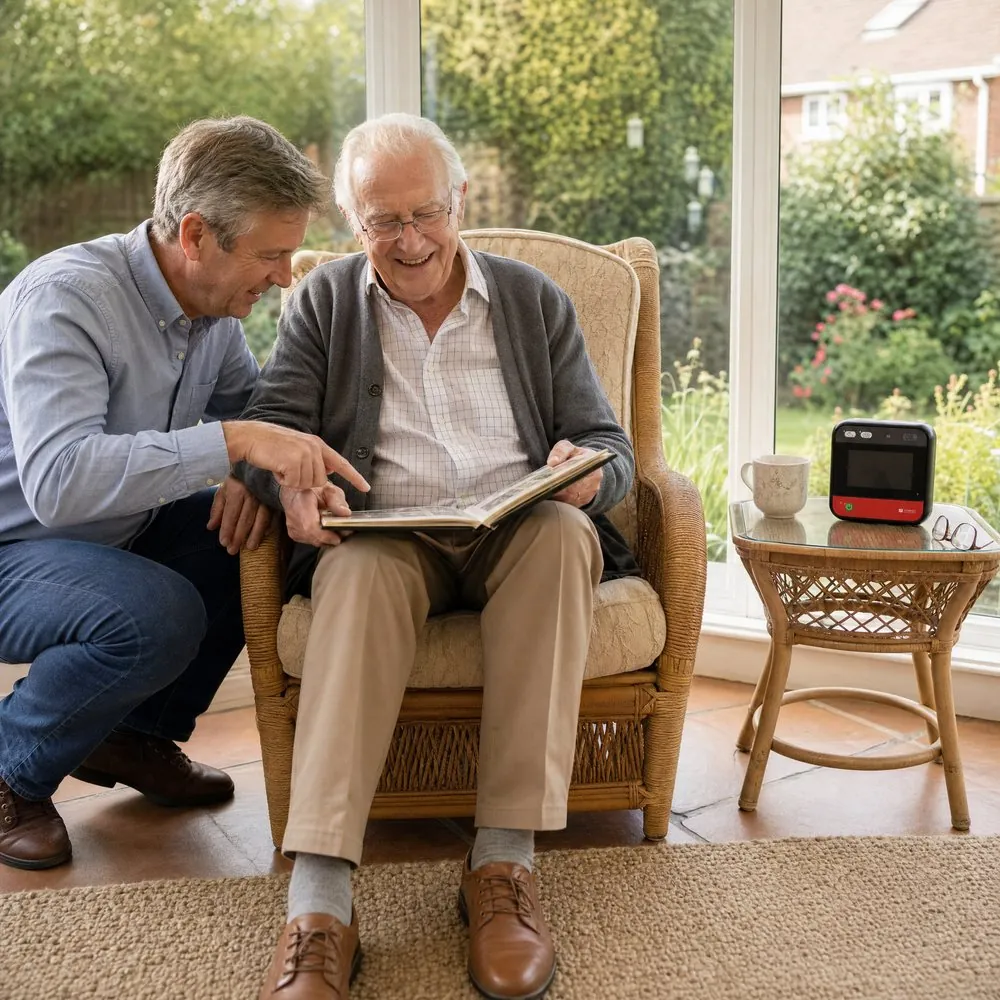
You are arranging one for a parent in their own home, perhaps a long journey from yours.
Read more →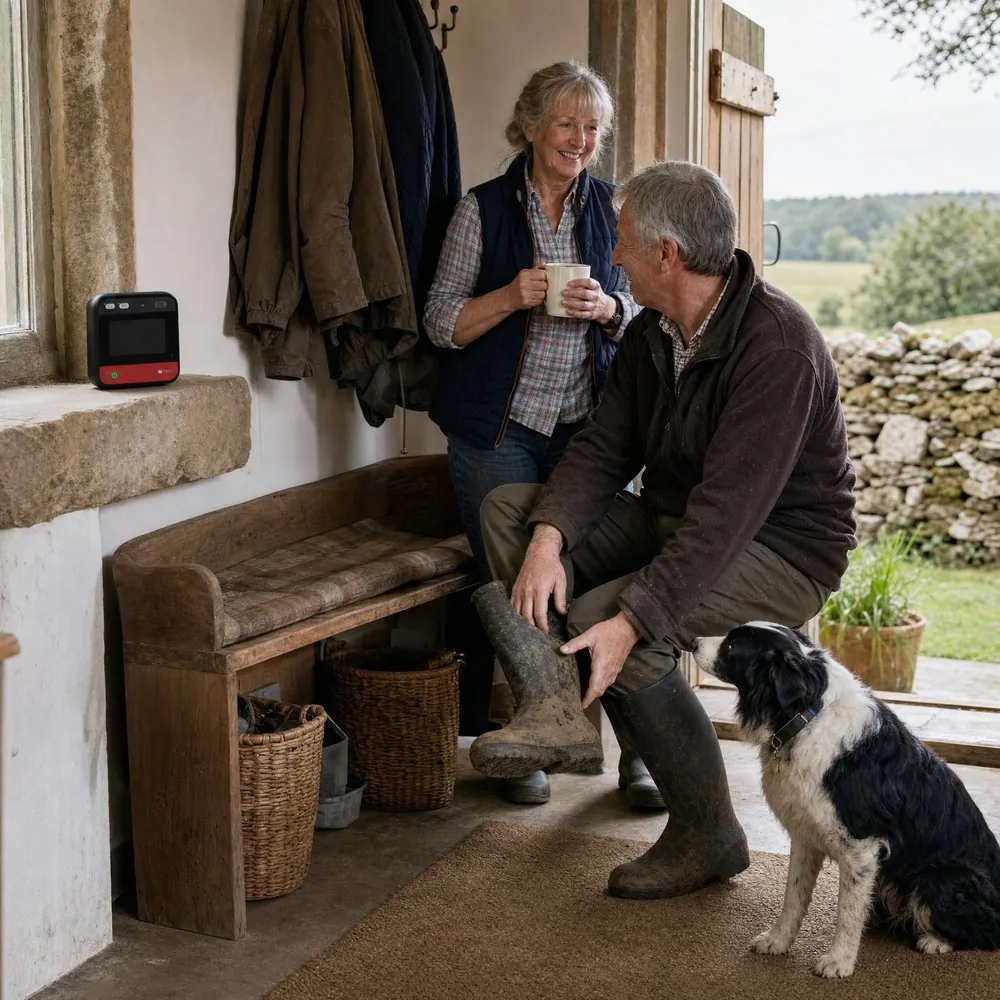
The nearest public defibrillator is a drive away, not a short walk from your front door.
Read more →
It is usually the two of you at home, and you would like one close at hand for you both.
Read more →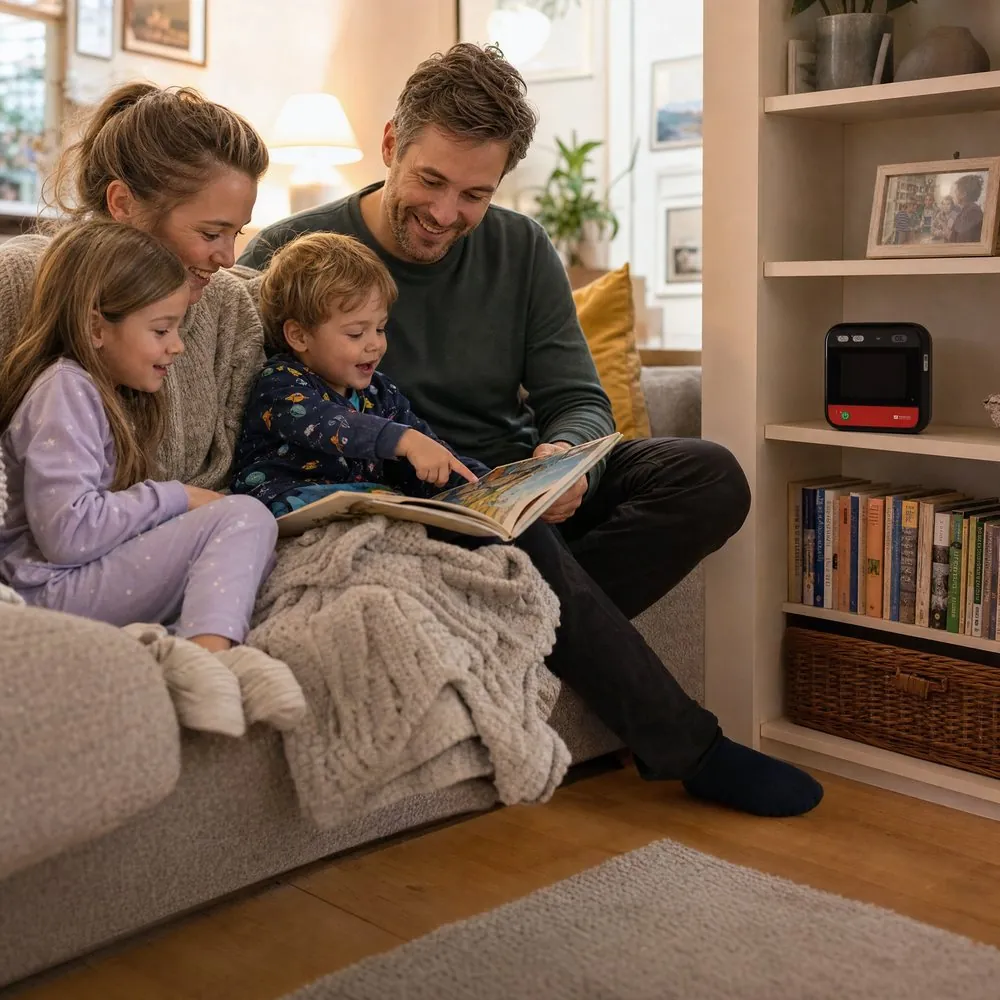
There are young children at home, and you want one that suits adults and children alike.
Read more →About half of cardiac arrests outside hospital in England happen in front of someone. Whoever you share your home with, a defibrillator in the house means that person has one close at hand.
Source: Resuscitation Council UK, 2025 Guidelines (England: 50.5% of out-of-hospital cardiac arrests are witnessed by a bystander).
Not quite one of those?
Your home might fit two or three of these at once, or none of them neatly. Either way, we start with who lives there and work out the rest with you.
In an emergency, always call 999 first. A defibrillator at home does not replace the ambulance.
For someone else
Whether it is for a parent, a partner, a sibling or a close friend, you can handle everything on their behalf, from the first conversation to the day we visit.
We go through the options with you and suggest the one that suits them and their home.
We come when it suits them, and show them where it is and how it works before leaving.
If anything needs attention, we get in touch with you, with them, or with both of you.
Beyond the home
Home Defib looks after homes. If you would like one at work, or some hands-on practice, the same team and our training partner can help.

The same monitored defibrillator service, set up for offices, shops, clubs and other places of work.
Visit Work Defib
No training is needed to use it, but if you would like hands-on practice, Promet runs an AED course.
See AED trainingWho lives there, where it is and who should hear from us: a few details and we will take it from there.
Not ready to talk yet?
Answer a few quick questions about where your home is and what is already in place, and get an honest summary with sources. No health questions, and nothing is saved.