Restart a Heart Day came round again on Friday 16 October. It does something genuinely useful every year: it gets people across the UK thinking about CPR, and it reminds us that anyone can help when someone's heart stops. Much of the coverage, quite rightly, shows CPR in public places such as high streets, stations and school halls. There is one part of the picture that gets less attention, though. Most cardiac arrests outside hospital do not happen in public. They happen at home.
According to the Resuscitation Council UK's 2025 Guidelines, 70 to 80% of out-of-hospital cardiac arrests happen at home. That is roughly 7 in 10.
When most of us picture a defibrillator, we picture a cabinet on the wall of a village hall or outside a pharmacy. Those community defibrillators do important work, and the people who fundraise for them and look after them deserve real thanks. They are simply not where most of these emergencies happen.
The same guidelines show that around half of out-of-hospital cardiac arrests in England are witnessed by a bystander (50.5%, Resuscitation Council UK, 2025 Guidelines). At home, that bystander is usually someone close: a partner, a son or daughter, or a friend who has popped round.
Here is the encouraging part: people are willing to step in. The Resuscitation Council UK's 2025 Guidelines report that between January and March 2025, a bystander started CPR in 72.6% of out-of-hospital cardiac arrests in England. That is a credit to campaigns like Restart a Heart.
The next figure is the one that stays with us. In the same period, a bystander used a defibrillator in 9.0% of cases in England (Resuscitation Council UK, 2025 Guidelines).
There are many reasons for that gap, and a lot of them come down to distance. If the nearest defibrillator is in a cabinet down the road, someone has to leave the person, go and fetch it, perhaps get a code for the cabinet, and come back. With a defibrillator in the house, that journey is a few steps down the hall.
A defibrillator, often called an AED, is designed to be used by people with no medical training. Once it is opened and switched on, it gives clear spoken instructions, step by step. It assesses the heart's rhythm itself and only gives a shock if the rhythm needs one.
It is just as important to be clear about what it is not. A defibrillator never replaces calling 999. In an emergency, call 999 first: the call handler will support you while an ambulance is on its way. The defibrillator is there to be used alongside CPR in the minutes before help arrives. It cannot promise an outcome, and we would be wary of anyone who says it can. What it does mean is that, if it is needed, it is close by.
If Restart a Heart Day has prompted you to learn or refresh CPR, that is a great next step. Our training partner, Promet, runs courses that cover it properly.
A home defibrillator helps in two ways.
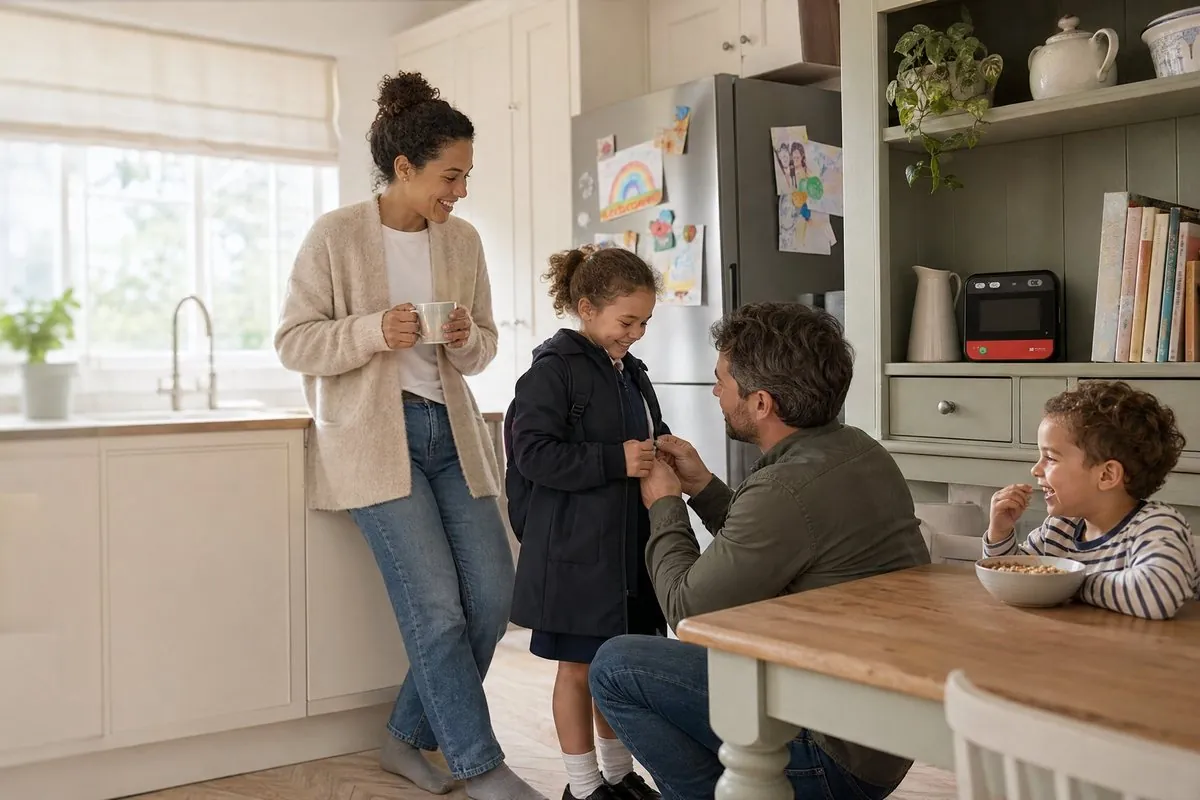
It is close, because it lives in the house. There is no journey, no cabinet code and no searching on a dark evening. Everyone at home knows the spot.
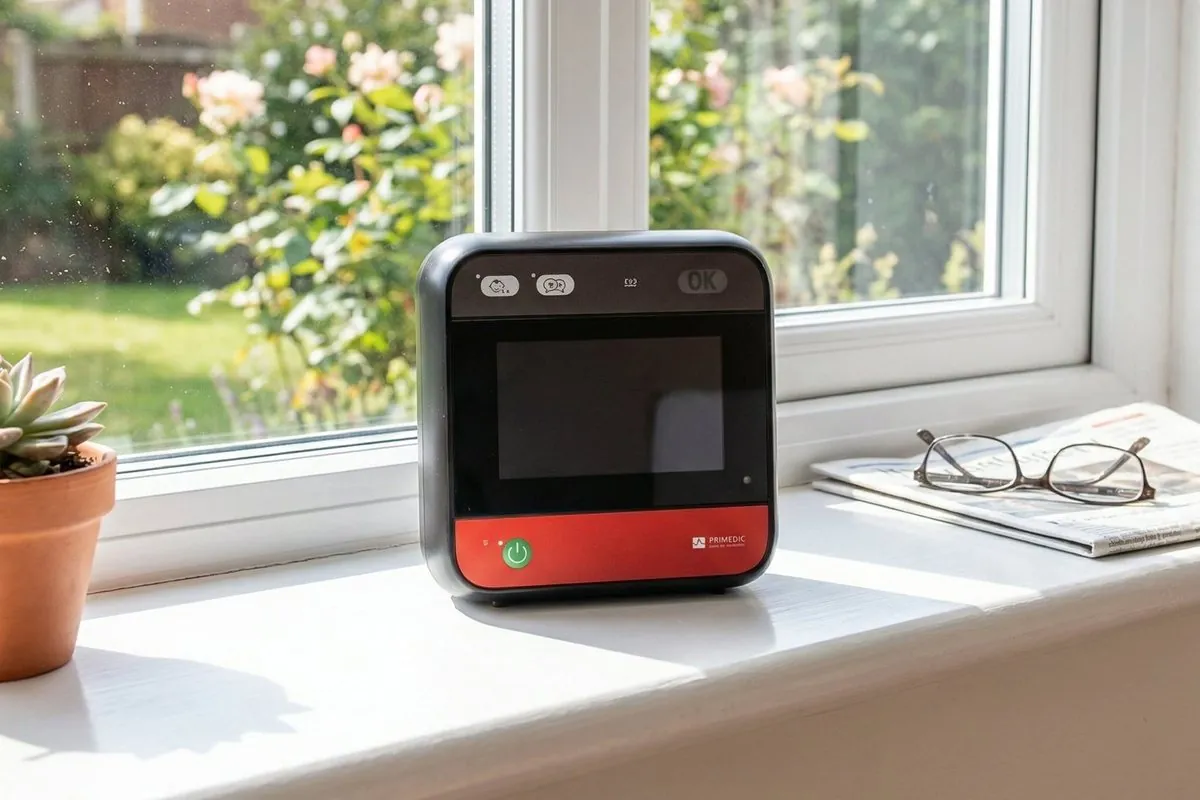
It is ready, as long as somebody keeps an eye on it. Pads and batteries do not last forever, and it is easy to forget to check. That is why our Complete Protection option is built around a daily self-check. Once a day, the Primedic HeartSave myPAD checks its electronics, battery and pads and reports the result to us over the mobile network. There is no Wi-Fi to connect, no app to check and no routine test to remember. If something needs attention, or the device stops reporting, we follow it up and get in touch with you.
If you would rather look after the device yourself, you can also buy the myPAD as a one-off purchase. Our pricing page sets out both options side by side.
Do I need training to use a home defibrillator?
No. It gives spoken, step-by-step instructions and only gives a shock if the heart's rhythm needs one. A CPR course will build your confidence, but the device is designed to be used by anyone. Always call 999 first.
Is a home defibrillator only for people with a heart condition?
No. Many households think of one simply as part of being prepared at home. If you have questions about your own health, your GP is the right person to ask.
Does a home defibrillator need Wi-Fi?
No. The myPAD reports its daily self-check over the mobile network. With Complete Protection, we check the signal at the spot where it will live during the set-up visit.
If you are wondering whether a defibrillator at home makes sense for your household, have a look at our guide to home defibrillators in the UK. Our earlier article on how a home defibrillator can help may be useful too. And if you have any questions at all, get in touch. We are happy to talk it through, with no pressure.
If you want a defibrillator at home without relying on memory, missed checks or once-a-year inspections, Home Defib can help. With Complete Protection or rental, we set it up in your home, it checks itself every day and reports to us, and we get in touch if anything needs attention. Get in touch to find out how it works.
Keep reading
Plain answers on what a defibrillator actually does, how buying, renting and monitoring compare, and why having one close by matters.